
Alzheimer’s and Dementia Clocks: What They Do, Why They Matter, and How to Choose the Right One
When someone is living with dementia (including Alzheimer’s), day-to-day life can start to feel unpredictable. One of the most common - and distressing - challenges is disorientation around time: not just “what time is it?”, but “what day is it?”, and “what’s meant to happen next?”
That’s where dementia clocks (often searched as “Alzheimer’s clock”) come in. They’re a simple piece of assistive technology designed to make time information unambiguous, readable, and reassuring.
This guide explains the function these clocks fill, why they’re important for people experiencing cognitive decline, the features they have and how they help. We stock a variety of dementia clocks using Perpetual Calendar technology, which means the date only need to be set once, with long and short months and leap years tracked internally.

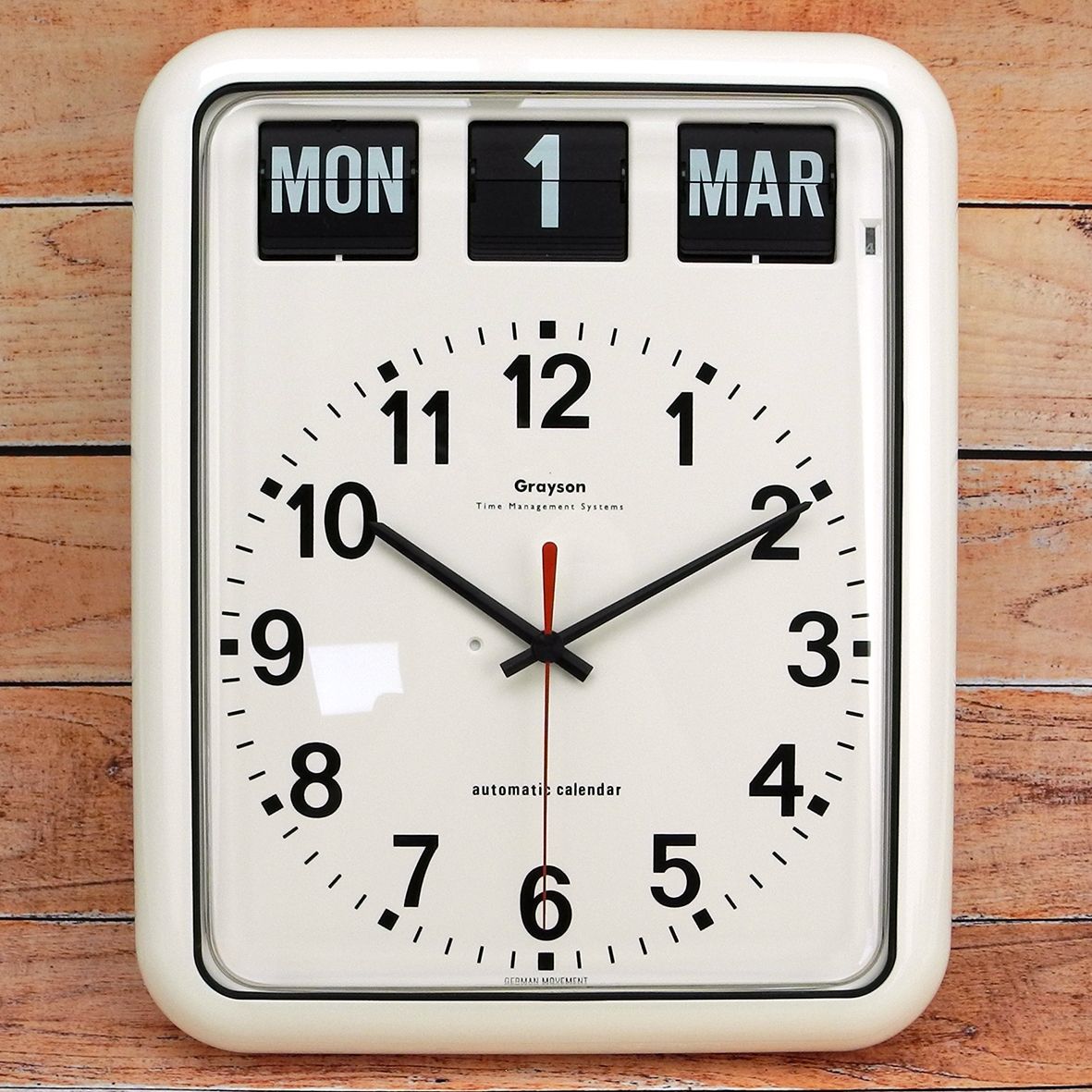
What is a dementia clock?
A dementia clock is an easy-read clock that shows:
- The time
- The day of the week
- The date
The key difference from a standard clock is that it reduces the need for interpretation. Instead of expecting someone to understand from a number based digital display, the clock spells it out clearly with words.
Many people also call these products Alzheimer’s clocks because they’re commonly used to support people living with Alzheimer’s (the most common cause of dementia).
WHAT DO DEMENTIA CLOCKS DO?
Think of dementia clocks as a practical solution to a very specific problem: time confusion.
1) Orientation and reassurance
Confusion about time can cause anxiety. If someone wakes and can’t tell whether it’s morning or evening, they may feel “out of sync” with the day - which can trigger distress, agitation, or repeated questioning.
A clock that clearly states the day, date and time of day can help ground them with a quick glance: “It’s Tuesday afternoon - I’m seeing my daughter later.”
2) Supporting routine and independence
Routines matter more as memory becomes less reliable. A clear calendar clock can support daily structure - meals, medication reminders (in combination with other aids), appointments, visiting times and bedtime habits - by making “where we are in the day and indeed, week” easier to understand.
3) Reducing the burden on carers
Many carers experience frequent repeated questions while undertaking their duties (“What day is it?”, “When are we going home?”, “Is it time for bed?”). A dementia clock doesn’t eliminate those questions entirely, but it can reduce how often they happen, and give the individual and carers an easy, consistent reference point.
Carer support organisations in the UK emphasise the importance of reliable information and practical help for those caring for someone with dementia.
Why dementia clocks are important for people with cognitive decline
Dementia is not just memory loss. It can affect language, processing speed, attention, visual perception and the ability to make sense of information quickly.
As cognition changes, this chain can break. Dementia-friendly design aims to support abilities for longer through clearer cues and less “mental effort”.
The Dementia Services Development Centre at the University of Stirling describes dementia design as a recognised non-pharmacological intervention and notes research showing it can support abilities and help improve quality of life.
A dementia clock is a small, everyday example of that principle in action.
Common scenarios where a dementia clock helps
Confusing days and missing routines
Seeing the full day/date can help someone anticipate patterns: “It’s Tuesday- my daughter visits on Tuesdays.”
Hospital discharge and returning home
After a change in environment (hospital, respite, moving rooms), time disorientation can worsen. A familiar clock can be one stable reference point.
Supporting people who struggle with digital clocks
Digital clocks require interpretation, namely what do those numbers represent?
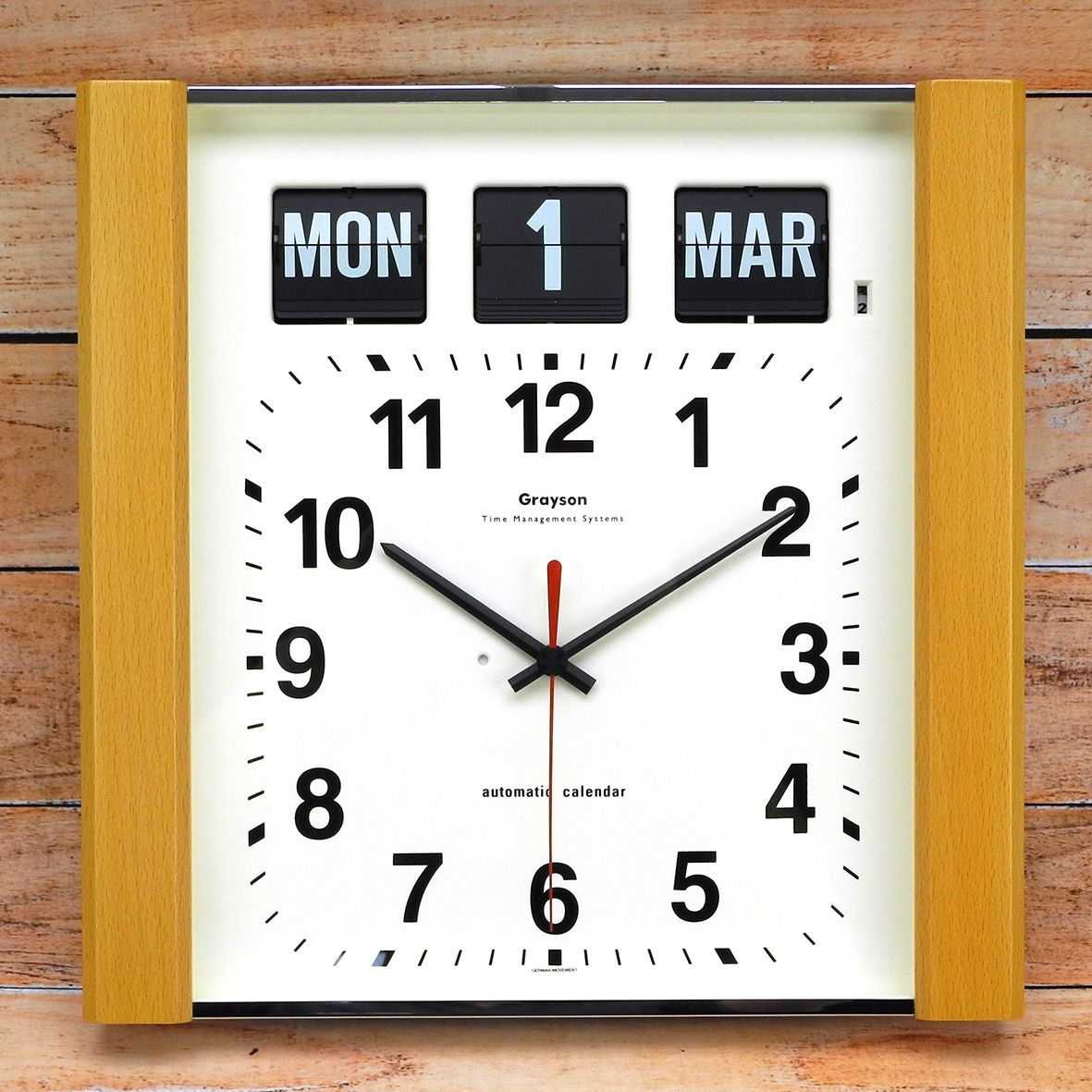
Our calendar clocks use a traditional clock face of the kind that many elderly people have grown up and lived with as their standard, making them an immediately recognizable time-keeping device.
We are taught from a very early age to recognise a clock face as a time piece. Many other appliances have digital displays, they are not unique to time keeping, which can lead to confusion.
What to look for in a good dementia or Alzheimer’s clock
Not all “dementia clocks” are equally helpful. Some are simply normal digital clocks with a calendar; others are truly designed for cognitive accessibility.
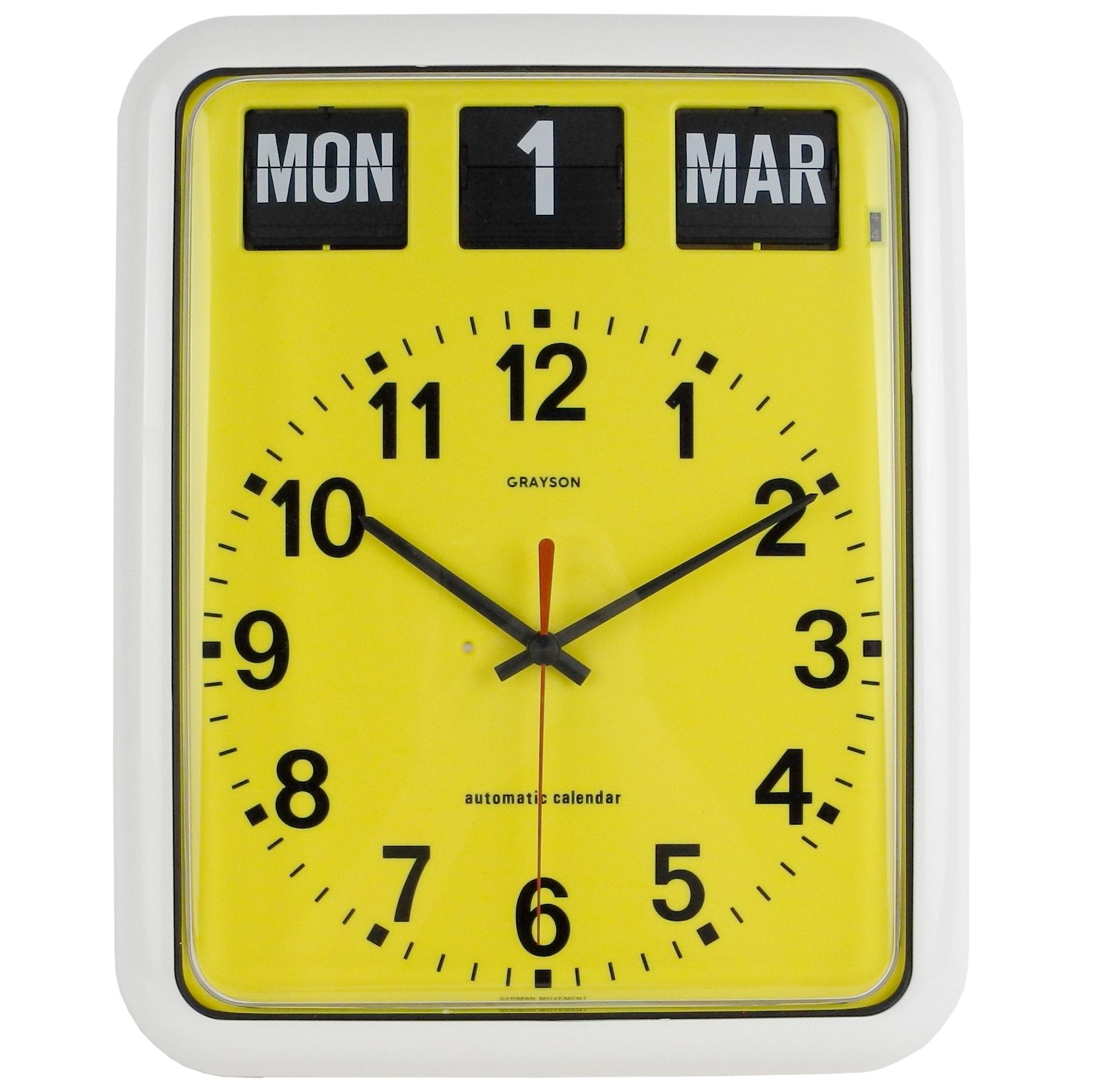
1) Large, high-contrast display
Big text and strong contrast (dark on light or vice versa) reduces strain, especially for users with vision changes.
2) Automatic adjustment
Look for clocks that automatically update for month length and daylight savings where relevant, so the display stays accurate without manual correction.
3) Placement matters more than you think
A great clock placed behind a lamp is wasted. Ideal locations are where the person naturally looks:
- By the bed (but visible without turning)
- Near or opposite a favourite chair
- In the kitchen / dining area
- In a hallway or common room in care settings
Dementia clocks vs other helpful aids
A dementia clock is just one kind of tool to build a coping strategy with - it often works best alongside:
- Simple routine boards (today’s plan in a few words)
- Medication organisers (with clear labels; some have alarms)
- Signage and wayfinding cues (clear, minimal, consistent)
Dementia design guidance often stresses reducing non-essential information and prioritising legibility to avoid confusion.
That principle applies at home too: keep the clock display clear and avoid surrounding visual clutter.
Choosing the right dementia clock: a quick checklist
If you're about to start shopping for a dementia clock, here's a brief list of the features to shop for:
- Is the person comfortable reading digital time? If not, traditional dial + wording is usually better.
- Is vision an issue? Go for larger display and stronger contrast.
- Where will the clock be used most?
- Who will maintain it? Carers may prefer “set-and-forget” reliability.