
A jewellery maker's guide to UK hallmarking
The moment you start selling your work as silver, gold, platinum or palladium, hallmarking becomes a legal requirement. It's one of the clearest dividing lines between making jewellery as a hobby and making it as a business.
A hallmark is a set of small marks struck or laser-applied to a piece by one of the UK's four Assay Offices. It shows that the metal has been independently tested and meets the fineness (purity) it claims to be. You can't tell the precious metal content of a piece by looking at it or holding it, which is exactly why the UK has protected buyers this way since 1327.
This guide explains when you need a hallmark, what each mark means, how to register your own sponsor's mark, and how to make sure pieces pass first time. If you're just starting out, you'll find our other guides in the jewellery making hub.
Please note: this guide is practical advice for makers, not legal advice. The Assay Offices are happy to answer questions about specific pieces, and their published guidance always takes priority.
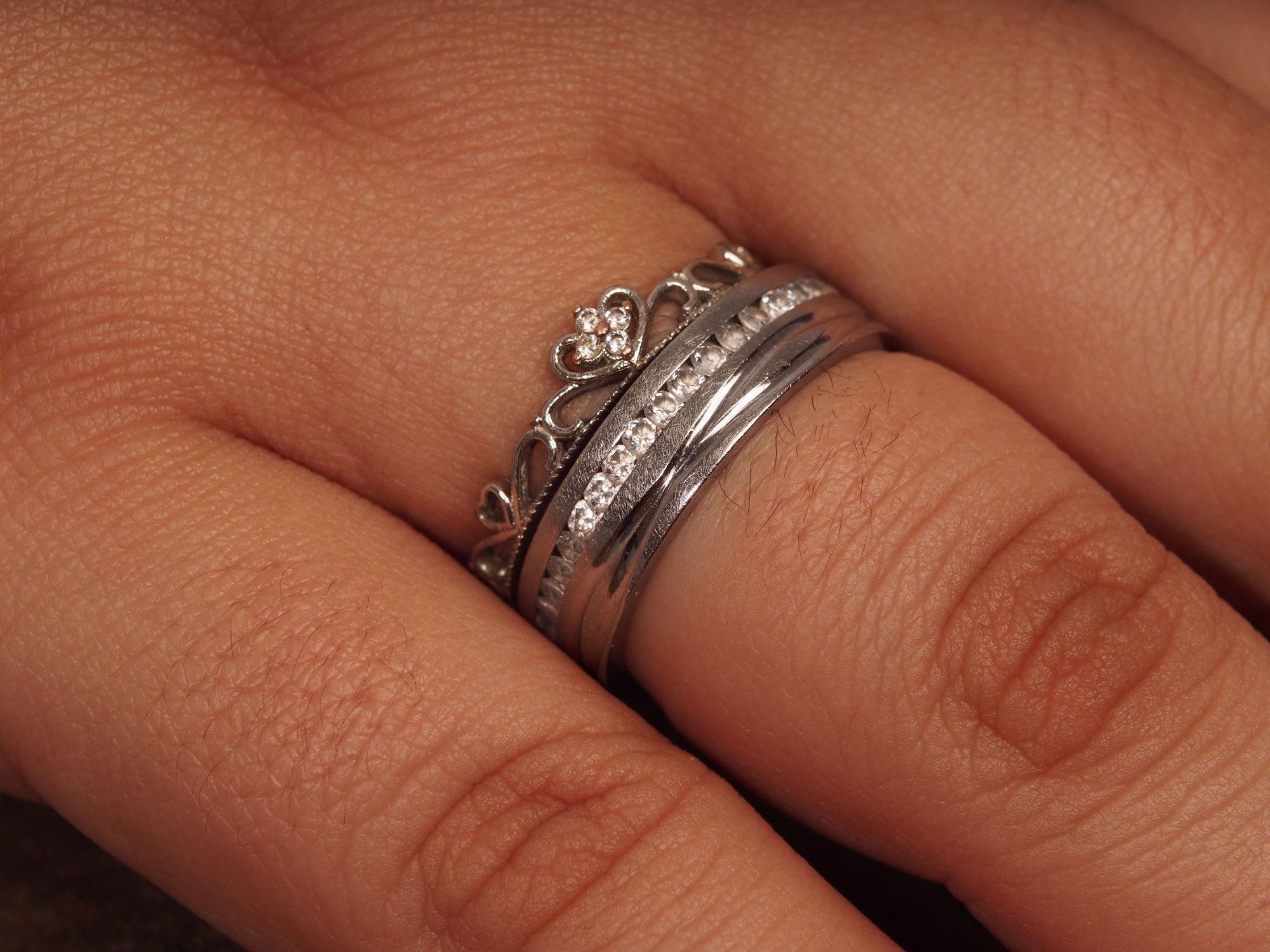
When does jewellery need to be hallmarked?
Under the Hallmarking Act 1973, it's an offence for anyone selling in the course of trade or business to describe an unhallmarked item as silver, gold, platinum or palladium, or to offer it for sale with that description. A description can be spoken, written, or even a manufacturer's "925" stamp. The rule applies equally to online shops, galleries, market stalls and bricks-and-mortar retail.
The main exception is weight. If a piece weighs less than the threshold for its metal, it doesn't need a hallmark (though it must still genuinely be the metal you say it is).
| Metal | Exemption weight (below this, no hallmark needed) |
| Silver | 7.78g |
| Gold | 1.0g |
| Palladium | 1.0g |
| Platinum | 0.5g |
Three details can often catch makers out:
- The weight is total metal weight. If a piece combines precious metal with base metal, you weigh all the metal, not just the silver or gold. Stones aren't included.
- Mixed precious metals use the stricter threshold. A pendant with 3g of silver and 0.5g of gold is judged against the 1g gold threshold, using the total of 3.5g. So it needs hallmarking.
- It applies to pre-owned items too, with an exemption for pieces you can prove were made before 1950 and meet the minimum fineness.
Other exemptions include raw materials such as sheet, wire and tube, unfinished items intended for further manufacture, and pieces being sent to customers outside the UK. If you're weighing pieces close to a threshold, an accurate set of jewellery scales takes the guesswork out of it.
Pro tip: a chunky sterling silver ring or a pair of statement earrings will often tip over 7.78g. Weigh your finished designs before you price them, so the hallmarking cost is built in from the start.
What does a UK hallmark consist of?
Every UK hallmark has three compulsory marks, struck side by side:
- The sponsor's mark. This identifies who submitted the piece, which is usually the maker or the business selling it. It's at least two letters inside a surround (a shield shape), and no two sponsor's marks at the same Assay Office are alike.
- The metal and fineness mark. A number shows the purity in parts per thousand (for example, 925 for sterling silver), and the shape of the surround tells you the metal.
- The Assay Office mark. This shows which office tested and marked the piece: a leopard's head for London, an anchor for Birmingham, a rose for Sheffield and a castle for Edinburgh.
You can also ask for optional marks:
- Traditional fineness symbols, such as the lion passant for sterling silver or Britannia for 958 silver. Customers recognise these, so many makers think they're worth adding.
- A date letter, which changes every 1 January. It was compulsory until 1999 and is now optional, but it's popular for commissions, wedding rings and anything made to mark an occasion.
- The Common Control Mark (CCM), recognised across the countries that have signed the International Hallmarking Convention. It's useful if you plan to sell into those markets.
UK fineness standards and solder rules
The Assay Office tests your piece against the fineness you submit it at, and the solder you use counts too. Each standard has a minimum permitted solder fineness, so using the wrong solder can mean a piece fails even if the sheet and wire were perfect.
| Metal | UK fineness standards (parts per thousand) | Common name | Minimum solder fineness |
| Silver | 800, 925, 958, 999 | 925 = sterling, 958 = Britannia | 650 for all silver standards |
| Gold | 375, 585, 750, 916.6, 990, 999 | 9ct, 14ct, 18ct, 22ct | 375 for 9ct; 585 for 14ct (500 for white); 750 for 18ct (500 for white) and above |
| Palladium | 500, 950, 999 | Precious metal solder of at least 500 (500 standard) or 700 (950 and 999) | |
| Platinum | 850, 900, 950, 999 | Precious metal solder matching the standard |
For makers, the practical takeaways are:
- Buy hallmarking-quality solder from a jewellery supplier. Hard, medium and easy silver solders made for jewellery work are designed to meet the 650 minimum. Cheap "silver-coloured" solders from general suppliers aren't.
- Keep solder to a minimum. Solder and adhesive are allowed, but not when used excessively, or to strengthen, add weight or fill gaps. Neat joins aren't just about looks, and our soldering guide covers how to get them.
- Base metal plating isn't allowed. You can plate silver with rhodium, gold and other precious metals, but not with nickel or copper, even as a hidden underlayer. If plating is applied after hallmarking, it mustn't be more than 2 microns thick.
The four UK Assay Offices
There are four Assay Offices in the UK, and each one is an independent organisation. Your sponsor's mark is registered with one office, so if you later switch, you'll need to register (and pay) again, and your chosen mark might already be taken there.
| Assay Office | Town mark | Website |
| London (Goldsmiths' Company) | Leopard's head | assayofficelondon.co.uk |
| Birmingham | Anchor | theassayoffice.co.uk |
| Sheffield | Rose | assayoffice.co.uk |
| Edinburgh | Castle | edinburghassayoffice.co.uk |
All four apply the same legal standards, so choosing between them comes down to practical things: how close they are if you'd like to drop off work in person, turnaround times, fees, and whether you like the look of their town mark. Most makers post their work, so location matters less than it used to. Several offices also run beginner training and tours for new makers, which is well worth taking up.
How to get your jewellery hallmarked, step by step
- Choose your Assay Office and register. You'll fill in a registration form (most offices let you do this online) and pay a registration fee. Registration typically lasts 10 years before it needs renewing.
- Design your sponsor's mark. Pick two to five letters, usually your initials or business initials, and a surround shape. You can use a logo if it includes at least two letters, but numbers on their own and designs that look like official hallmarks won't be approved.
- Choose punch or laser marking. A traditional hardened steel punch gives the classic struck look. Laser marking needs no punch and suits delicate or finished pieces that could distort under a punch. Many makers register both. Punches take a little longer to produce, so allow a few weeks.
- Make and finish your pieces. Make sure every component that'll be in the final piece is included. The Assay Office has to see all the parts before it marks anything.
- Submit your work. Group pieces by metal and fineness, and send each group as a separate packet with the submission form. Mixing finenesses or marking methods in one packet usually means extra charges.
- Testing and marking. The office samples and tests the metal, then applies the hallmark. If a piece falls below the standard you submitted, it'll be rejected or, in some cases, marked at a lower standard you've agreed to.
- Final finishing. Punch marking can leave a slight dent or distortion, so plan for a light re-polish after your pieces come back.
Fees change, so check your chosen office's current price list before you budget. As a guide, expect a one-off registration fee, a punch or laser set-up fee, and then a per-item hallmarking charge with a minimum charge per packet.
Tips to help your pieces pass first time
Generally, hallmarking problems will only arise if you've made a mistake during the creation of a piece. Build these habits into your working practice from the start and you have a decent chance of your pieces being hallmarked successfully.
- Plan where the hallmark will go. Leave a flat, smooth area thick enough to take a punch without distorting: the inside of a ring shank, the back of a pendant or a bail are common choices. On thin or hollow pieces, ask for laser marking instead.
- Know your metal. Buy sheet, wire and findings from reputable suppliers, keep scrap separated by metal and fineness, and don't mix sterling offcuts into a piece you're submitting as Britannia silver. If you're unsure what an old piece of metal is, precious metal testing equipment can check it before you commit it to a design.
- Watch your solder. Use the right grade for the metal and keep joins clean. Excess solder sitting in a join is one of the most common reasons silver fails.
- Separate your metals clearly. You can combine precious metals, or precious metal with base metal, but the different metals must be easy to tell apart by colour or texture. Pieces with visible base metal parts get a "+METAL" mark next to the hallmark, so leave room for it.
- Submit complete pieces. Once a new piece has been hallmarked, you can't add to, alter or repair it without the Assay Office's written consent. Swapping in parts that weren't tested with the hallmarked component is an offence.
- Hold back the plating. If you're rhodium or gold plating, check whether your office wants the piece before or after plating, and remember the 2 micron limit for plating added afterwards.
Pro tip: if you upcycle old hallmarked silver, such as turning spoons into rings or pendants, you'll still need to send the finished piece to an Assay Office before selling it. They'll check the original mark is still valid and issue a certificate.
Selling online, at markets and in shops: the Dealers' Notice
If you sell precious metal jewellery, the Hallmarking Act also requires you to display the Dealer's Notice. This is an official poster from the British Hallmarking Council that explains what hallmarks mean, and it's an offence not to show it.
- In a shop, at a fair or on a market stall, display the notice somewhere customers can clearly see it. It must be the official version, printed in black and white, legible and unaltered. You can download it free or buy a printed copy from the Assay Offices.
- Online, the British Hallmarking Council's view is that the Act applies to internet sales too. There's a digital version of the notice designed for websites, which many jewellers add as an extra image on their product listings.
It's also worth getting your product descriptions right. Gold-plated silver must be described as silver, with "gold plated" stated directly (for example, "18ct gold plated silver ring"). A base metal piece can't simply be called "gold", even if you only mean the colour: "gold tone" or "gold coloured" is the safe wording.
The London Assay Office has a downloadable version of the Dealers' Notice which you can find here.
Hallmarking FAQs
Do I need to hallmark silver jewellery under 7.78g?
No. Silver pieces weighing less than 7.78g in total metal weight are exempt, though you must still only call them silver if they genuinely are.
Can I stamp "925" on my own work instead?
Only on pieces below the exemption weight. Above it, a self-applied 925 stamp counts as describing the piece as silver, so it needs a full hallmark.
Do I need a hallmark if I only make jewellery as a hobby?
Not if you're making pieces for yourself or giving them away. The law applies when you sell, or offer to sell, in the course of trade or business, including at craft fairs and online.
Can I hallmark gold-plated silver?
Yes. It's hallmarked as silver, and should be described as silver with "gold plated" stated alongside it.
Can I hallmark jewellery that mixes silver with brass or copper?
Yes, as long as the metals are clearly distinguishable and the precious metal meets the minimum fineness. The hallmark goes on the precious metal part, with "+METAL" next to it.
Is a date letter compulsory?
No. It's been optional since 1999, but you can request it.
Can I use my business logo as a sponsor's mark?
Yes, if the Assay Office approves the design. It needs at least two letters (or an approved standard surround), and it must be small enough to make into a legible punch.
Do I need to hallmark pieces I'm sending abroad?
Pieces sent to destinations outside the UK are exempt from UK hallmarking, but the destination country may have its own rules. The Republic of Ireland, for example, has no exemption weights.
Your hallmarking checklist
- Have I weighed the finished piece against the exemption weight for its metal?
- Is every component the same fineness, or clearly distinguishable if not?
- Did I use hallmarking-quality solder, and only as much as the joins need?
- Is there a flat, solid area for the mark, or should I ask for laser marking?
- Are all the parts in the packet, grouped by metal and fineness?
- Is the Dealer's Notice on display wherever I sell, including my website?
Visit our jewellery-making hub
We've got a collection of articles dedicated to helping you master the art of jewellery making, from how different metals behave to polishing a piece to a professional finish. You'll find everything you need for your bench in our jewellery tools and equipment section.